Savona in Half a Day: Priamar, old Savona, the Cappella Sistina with A
 Savona is one of those Ligurian cities that many travellers simply pass by. When people think of this stretch of the Riviera, they are often drawn first to Finale Ligure, Noli, Alassio or the better known coastal
 towns around Genoa. Savona tends to remain slightly in the background, perhaps because at first glance it is less immediately charming than some of its more famous neighbours. And that is precisely what makes it interesting to me.
Savona is not a city that reveals itself completely within the first few minutes. It is a port city, an administrative centre, a shopping town and a place where people live and work. Between medieval lanes, spacious squares, old palazzi, harbour structures and the sea, you gradually discover a very authentic part of Liguria. Spend a few hours here and it soon becomes clear that Savona is far more than just a place you pass on the motorway on your way towards Genoa.
For a first visit, I particularly like the late afternoon. By then, the strongest heat has usually passed, the city begins to feel livelier, people are leaving offices and shops, and around the harbour the first signs of aperitivo time appear. It also allows you to plan the walk so that you reach Piazza Mameli at around 6 pm, before continuing towards the Darsena and finishing the day with a drink and a good dinner.
For this walk, I would allow around four to five hours. A good starting time is about 3.30 pm at the Fortezza del Priamar. From there, the route leads through the historic centre with Via Pia, the cathedral and the Cappella Sistina, then across Piazza Mameli and past the Torretta before ending at the Vecchia Darsena. If you like, you can stay there for aperitivo and dinner.
Start at the Fortezza del Priamar
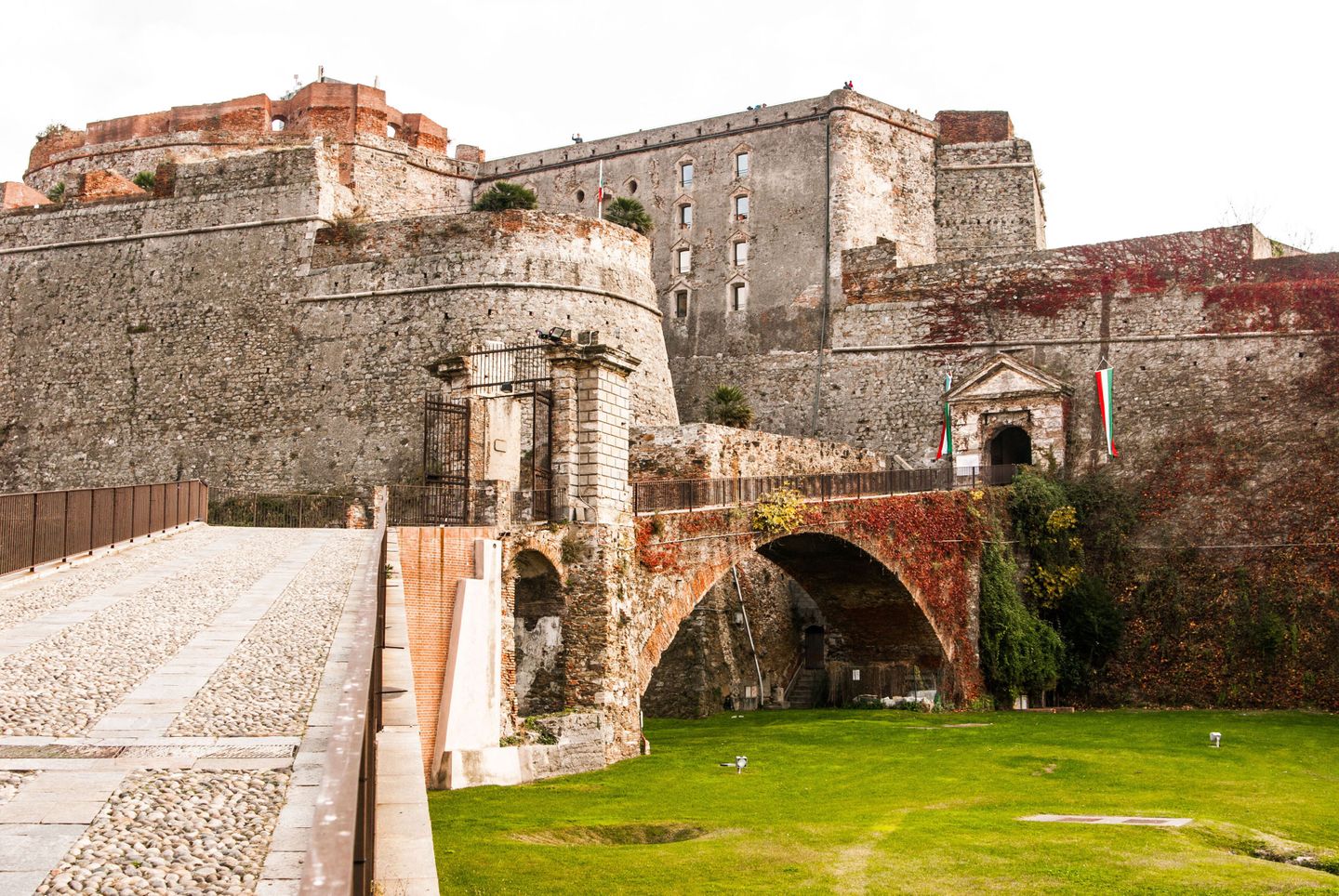
The best place to begin is the Fortezza del Priamar. There are several parking options nearby, including the open Priamar car park and the Dell’Arsenale parking garage, so you can leave the car conveniently and be in the historic part of Savona within minutes.
The fortress rises directly above the sea and is one of the city’s most important landmarks. Even on the way up, the views repeatedly open out over the harbour and coastline. From the bastions, you also get a very good sense of how Savona is laid out. The sea, harbour, old town and newer districts are all surprisingly close together.
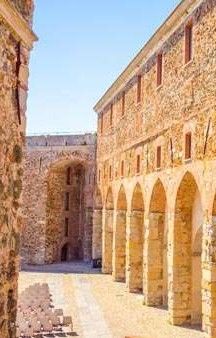
For me, the Priamar makes an ideal beginning because you see the city first from a little distance before gradually moving into its streets. Those interested in history can of course visit the museums and exhibition spaces, but for this particular walk I would mainly take time to enjoy the complex itself, wander along the walls and take in the views.
 From the Fortress into the Old Town
From the Priamar, the route continues downhill towards the historic centre. Within a few minutes, the atmosphere changes noticeably. The open spaces around the fortress give way to narrower streets, the buildings move closer together, and suddenly you find yourself among lanes, passageways and small piazzas.
A useful landmark is the Torre del Brandale, also known as the Campanassa. It is one of Savona’s historic symbols and a reminder of how important the city once was as a medieval port and trading centre. From here, it is only a short walk to Via Pia, one of the streets I particularly enjoy on this route.
 Via Pia and Old Savona
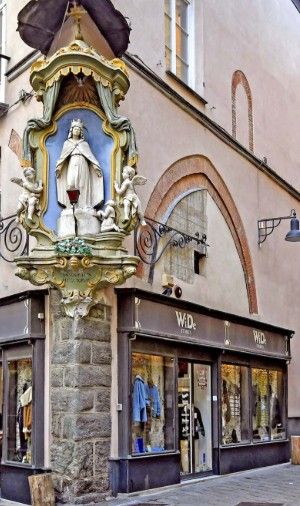
Via Pia is a street that rewards a slower pace. If you only look at the shop windows, you miss much of what makes it interesting. The façades, doorways, window frames and courtyards hint at a period when Savona was politically and economically far more important than many visitors might assume today.
It is also worth turning into a side street every now and then or making a small detour across one of the nearby squares. Those little deviations are often what make a city walk memorable. Piazza de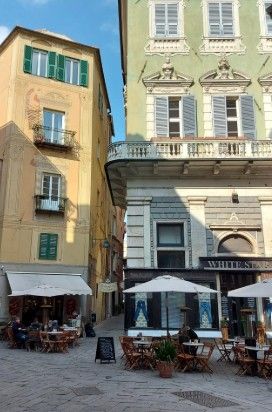 lla Maddalena and Piazza Chabrol are both in this part of the old town.
For me, this is also a good area for a first short break. An espresso, a gelato or simply ten minutes at an outdoor table fits the mood better than following a rigid timetable. Savona is not really a city defined by one spectacular sight. Its appeal comes from the mixture of everyday life, history and the details you notice along the way.
 The Cathedral and the Cappella Sistina
From Via Pia, continue towards the Cattedrale di Nostra Signora Assunta. If you go inside, take a look at the wooden choir stalls behind the high altar.
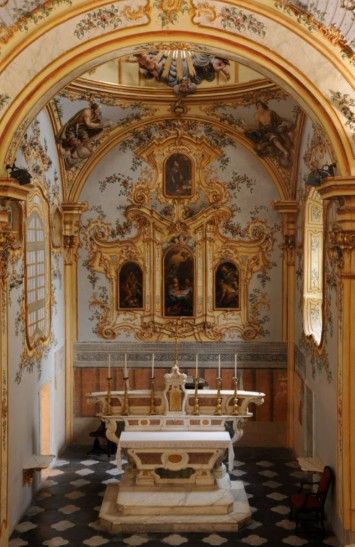
Very close by is one of Savona’s most interesting surprises, the Cappella Sistina.
The name is genuinely connected to the famous Sistine Chapel in Rome. Pope Sixtus IV had the chapel in Savona built in the 15th century as a funerary chapel for his parents. Many visitors are genuinely surprised to discover that Savona has its own Cappella Sistina.
It is much smaller and more intimate than its world famous counterpart in Rome, and that is part of its appeal. Together with the cathedral and the surrounding religious buildings, it forms a particularly harmonious historic ensemble.
If you would also like to visit the Stanze dei Papi, it is worth checking opening times and guided tour options in advance, as they are not always accessible.
Continue towards Piazza Mameli
After the cathedral, continue via Piazza Sisto IV and Corso Italia towards Piazza Mameli. The character of the city changes once again. The narrow medieval lanes give way to broader streets and larger squares, and Savona begins to feel more elegant and urban.
If you have not stopped for coffee or gelato earlier, this is a good moment. Just keep an eye on the time, because it is worth arriving at Piazza Mameli shortly before 6 pm.
 6 pm on Piazza Mameli
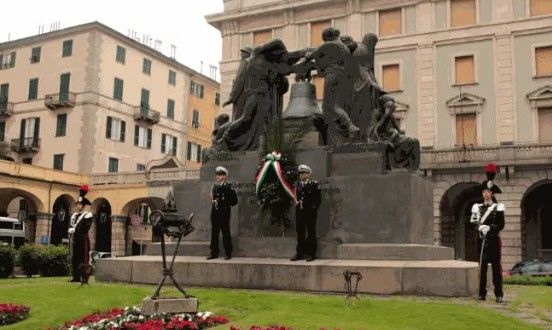
Piazza Mameli is an essential part of this walk because every day at 6 pm, 21 bell tolls sound at the Monumento ai Caduti in memory of those who died in the wars.
Many people in Savona have known this moment since childhood. For visitors, what makes it particularly moving is how naturally the tradition belongs to the rhythm of the city. For a few minutes, the atmosphere of the square noticeably changes, and because the ritual is part of local life rather than something created for tourists, it often stays in the memory.
I would arrive a few minutes early and simply find a place at the edge of the square.
Along Via Paleocapa to the Torretta
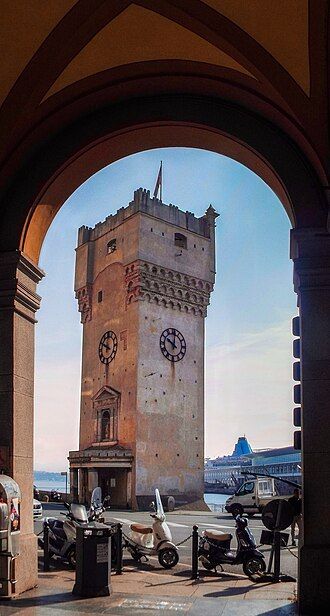
From Piazza Mameli, continue along Via Paleocapa towards the sea. It is one of Savona’s main streets, and before long the Torre Leon Pancaldo appears ahead, usually referred to by locals simply as the Torretta.
The small tower is one of the best known symbols of the city and stands right by the harbour. This is also where the transition from the centre to the sea becomes especially clear. Behind you are streets and squares, while ahead the harbour basins, boats and the Darsena begin to open up.
In the early evening, the whole area develops a lighter atmosphere. The light softens, cafés begin to fill, and the walk gradually shifts from sightseeing into a relaxed evening by the water.
 Evening at the Vecchia Darsena
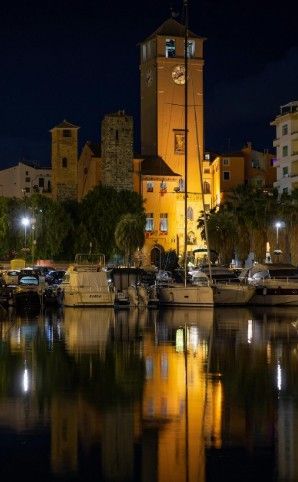
From the Torretta, continue into the Vecchia Darsena. For me, this is the nicest place to end the afternoon.
Boats lie close together in the water, locals and visitors settle around the tables, and aperitivo time begins around the harbour. You can order a glass of wine, a Spritz or something non alcoholic and simply watch the life around you for a while.
Savona shows yet another side of itself here. The city is not only historic, but still deeply connected to its harbour. That combination of old walls, modern city life and maritime atmosphere is a large part of its character.
Two Tips for Dinner
If you would like to stay around the Darsena after aperitivo, there are several restaurants nearby and it is easy to decide spontaneously. I would simply walk past the different places, look at the menus and see what appeals to you.
There are, however, two addresses I would particularly recommend.
Osteria da Bacco is a good choice if you are looking for traditional Ligurian cuisine in a characterful, relaxed setting. It fits this walk very well and is a pleasant place to end the evening without too much formality.
Another option is Magna cum Laude in Piazzetta del Vescovado near the cathedral. The restaurant is small, personal and a little quieter. I have known Monica and Pier, who run it, for many years. If Maremonti guests would like to eat there, I am always happy to let them know in advance.
How Much Time Should You Allow for Savona?
I would plan around four to five hours for this walk. If you start at the Priamar at about 3.30 pm, you can explore the old town at an unhurried pace, visit the cathedral and chapel, arrive at Piazza Mameli in time for 6 pm, and still have plenty of time afterwards for the Torretta, the Darsena and aperitivo.
A possible schedule could look like this:
3.30 pm Fortezza del Priamar
around 4.30 pm old town and Via Pia
around 5 pm cathedral and Cappella Sistina
shortly before 6 pm Piazza Mameli
from around 6.15 pm Via Paleocapa and Torretta
from around 6.30 pm Vecchia Darsena and aperitivo
dinner afterwards
The timings are only meant as a guide. If you discover a lovely shop, linger on a piazza or decide to stop for another coffee, that is part of the pleasure rather than a problem.
My Take on Savona
Savona may not be a city you fall in love with at first sight, but it rewards a little time and attention.
The longer you walk through its streets, the more interesting the mix of history and everyday life becomes. Elegant façades stand next to ordinary residential buildings, old towers meet modern harbour structures, and throughout the city you encounter a Liguria that has not been polished exclusively for visitors.
Perhaps that is exactly where its charm lies.
An afternoon in Savona feels less like working through a sightseeing checklist and more like getting a small glimpse into the life of a Ligurian port city. And when you sit in the Darsena in the evening, with the boats on the water and the lights slowly coming on around the harbour, it becomes very easy to understand why Savona is worth more than simply driving past.